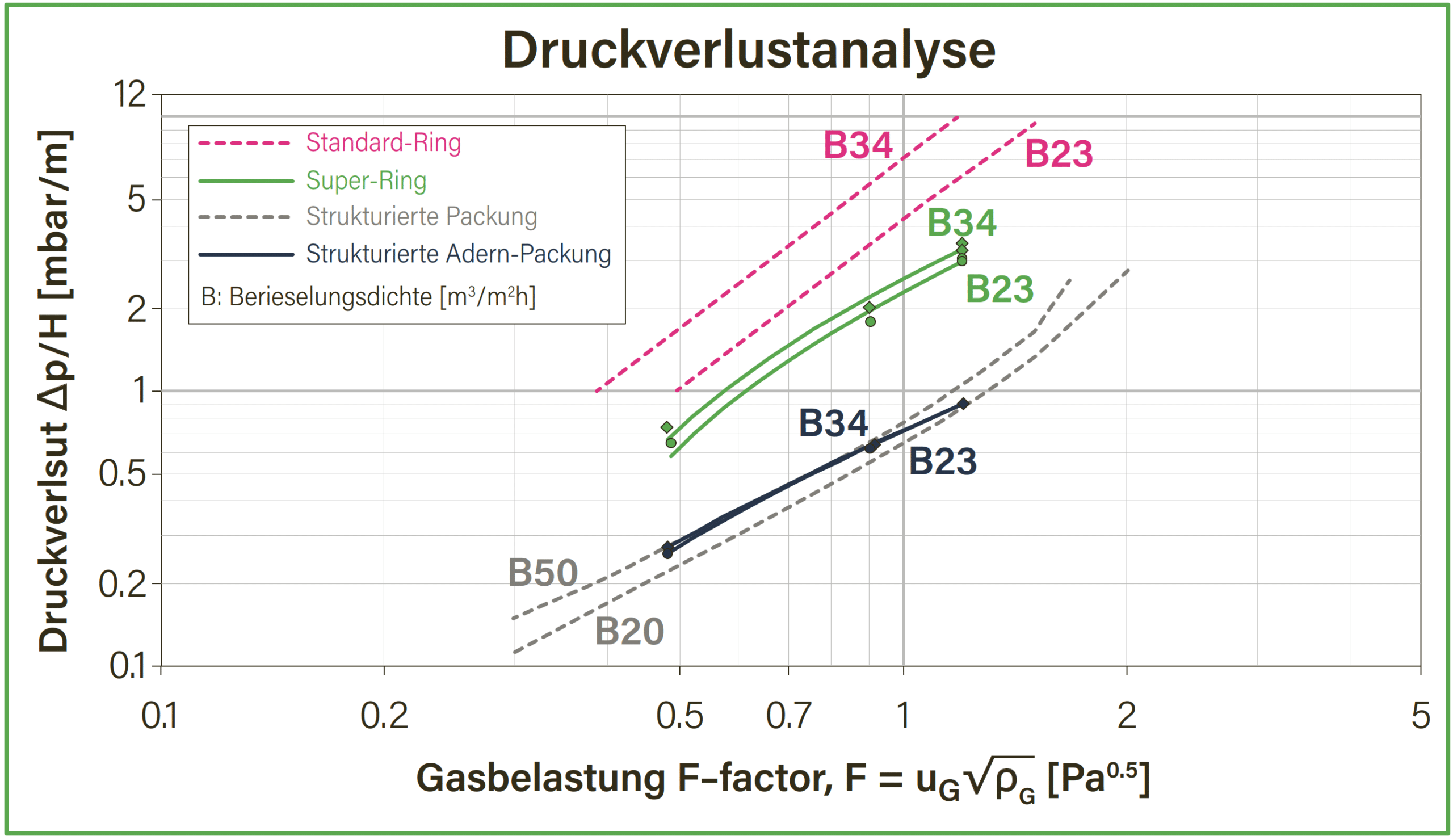

Since 1914, the so-called Raschig ring has been used as packing material in separation columns. In numerous modifications and designs, such packing material can be filled into columns in order to achieve the largest possible surface area with the smallest possible pressure loss of the flowing media when exchanging material components between a gas and a liquid phase. These packing materials are tipped loosely—unstructured—into the usually circular columns. For more demanding applications, this unstructured packing can be replaced by structured packing, which is optimized for the dimensions of the column and manufactured specifically for this purpose. However, these are expensive, difficult to handle, and fixed to the respective dimensions.
Lessmann, as a well-known innovative medium-sized manufacturing specialist, has teamed up with technical experts from GEC Engineering and Consulting GmbH to develop a solution for such packings that combines the advantages of unstructured packing with those of structured packing, without, however, inheriting the disadvantages (expensive, difficult to handle, inflexible in terms of dimensions) of structured packing.
In addition, particularly in light of the current focus on reducing fossil fuel consumption, all well-known operators and builders of chemical plants are attempting to heat endothermic chemical processes using electricity instead of fossil fuels. The newly developed packings from Lessmann are also ideal for this purpose, delivering heat to the required locations without significant temperature gradients and with maximum surface area for efficient heat transfer.
These new packings therefore allow operating costs at the level of structured packings for an investment at the level of unstructured packings, and this with high flexibility and easy handling.
Numerous tests at Lessmann and the Technical University of Darmstadt have confirmed and documented this.
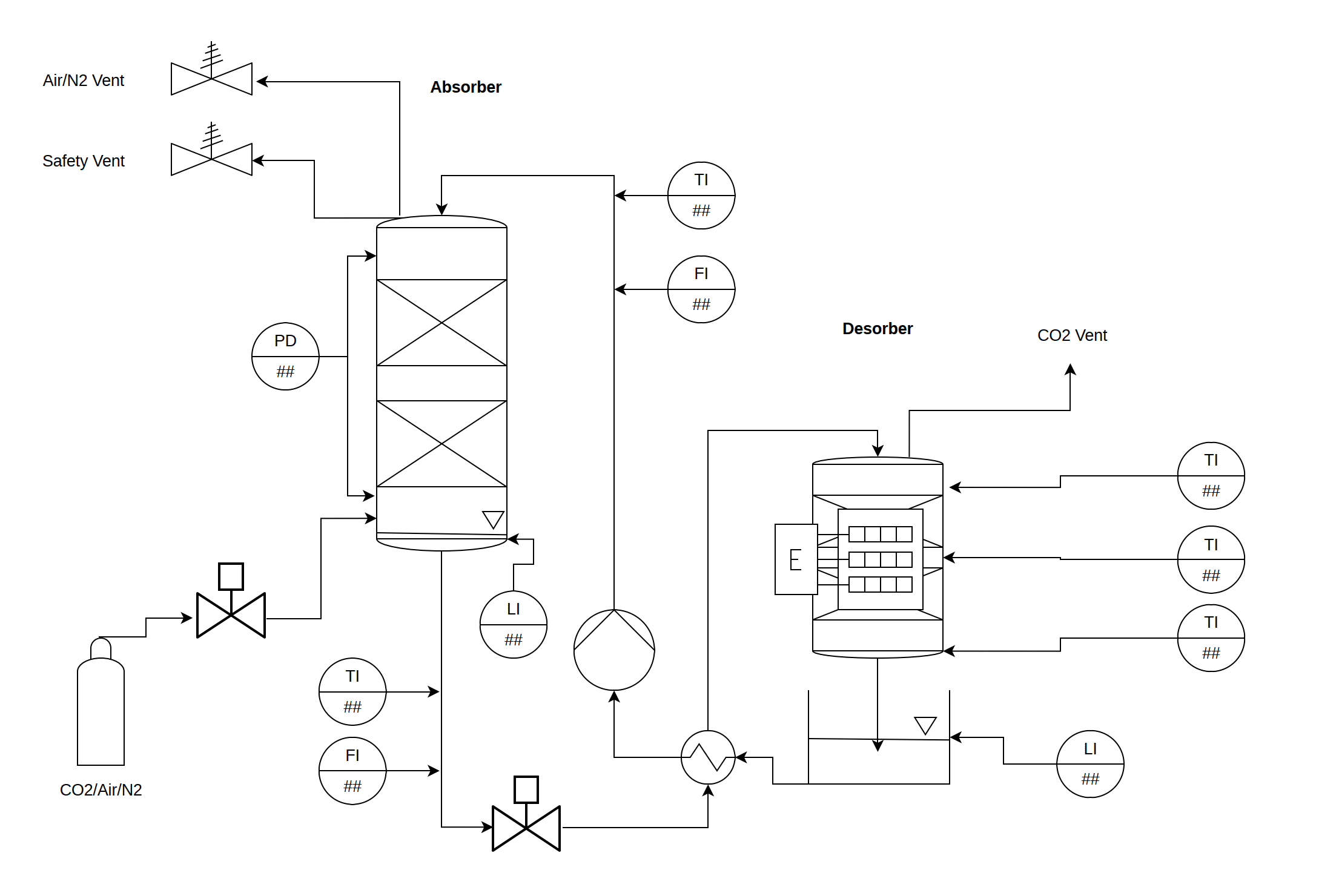
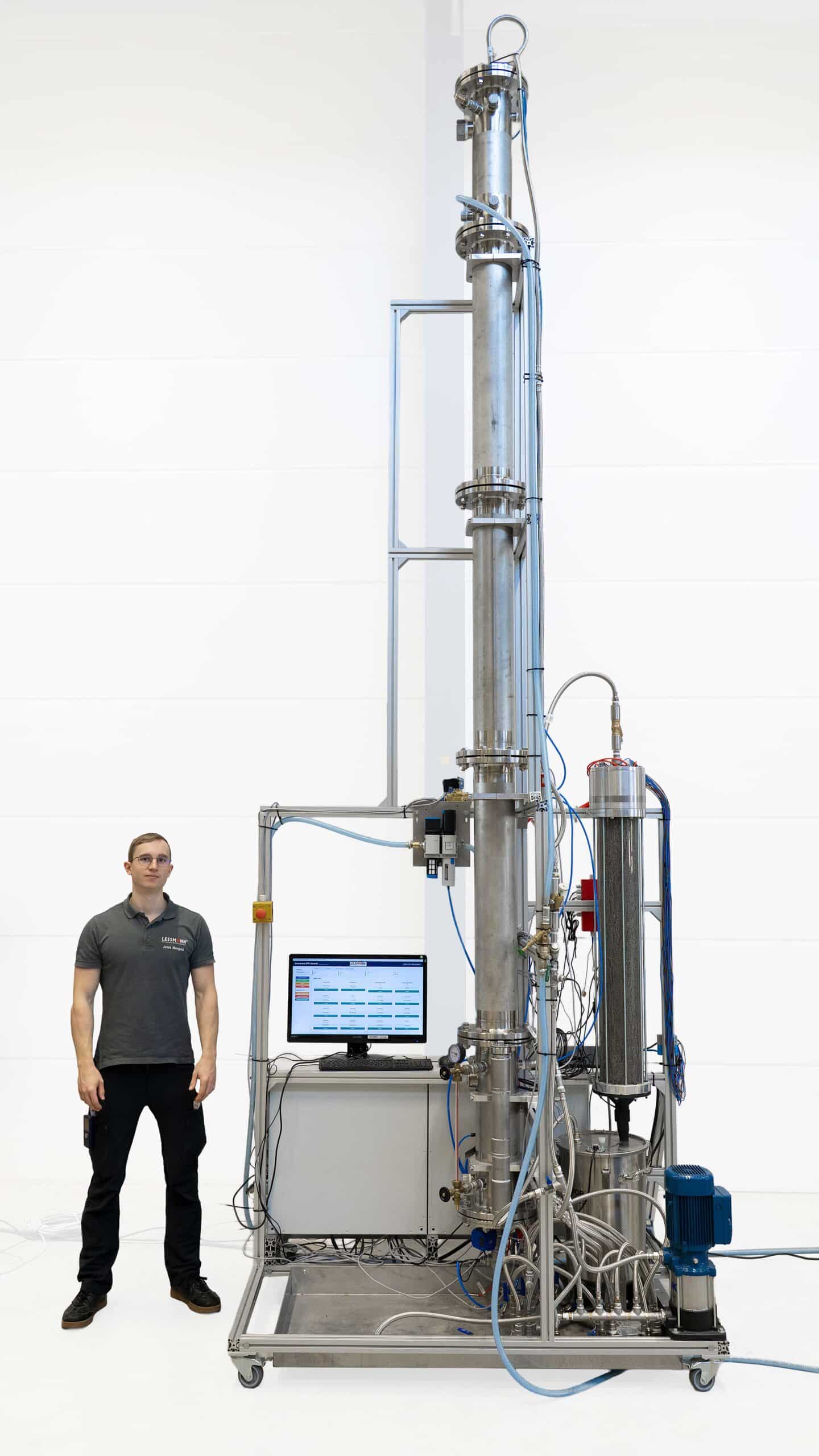
In addition to tests in accordance with VDI Guideline 2761, this was tested on an amine scrubber for CO2 removal. Efficient separation of climate-relevant gases to produce so-called “blue” products is the economic key to the climate-friendly conversion of production processes in chemical, petrochemical, and energy production.
These research findings are particularly relevant for the chemical industry and refineries. Switching to the new packings will make processes more efficient and cost-effective.
The current project status is the result of several years of research. Lessmann GmbH, GEC Engineering and Consulting GmbH, and TU Darmstadt worked toward the current result in numerous experiments and research series. The project was financially supported by the Federal Ministry for Economic Affairs and Energy as part of the “Central Innovation Program for SMEs (ZIM)” funding program.
Research into the further optimization of this packing is ongoing. The latest information on the status of the project will be published here.
To date, 12 utility models have been granted by the German Patent and Trademark Office for this project, and a patent based on a granted utility model has been applied for (as of September 2025).
The 58th Power Plant Technology Colloquium will take place in Dresden on October 6 and 7, 2026. This will be our first time attending, and we look forward to an exciting exchange of ideas.

Further links
TU Darmstadt – Technical University Darmstadt

ZIM – Innovation programme for small and medium-sized enterprises
___________________________________________________
Excerpts and further information on the research series with test bench:
Determination of fluid distribution
A dedicated test rig was developed and constructed to determine the liquid distribution in columns. To ensure that there was no influence from the liquid input, the test rig was first tested empty, i.e., without packing. This showed an even distribution of liquid. Pall rings were then filled in first and showed the results shown in the top row under various fluid loads.
Subsequently, various alternative packing materials from Lessmann were tested and showed the results shown in the bottom row. The more uniform the color distribution, the more uniform the liquid distribution. The alternative packing materials from Lessmann are clearly superior to the state of the art, achieving this with significantly lower pressure loss, lower material usage, easier handling, and comparable costs.

Difference in liquid distribution when using conventional Pall rings (top row) compared to alternative packing materials from Lessmann (bottom row)
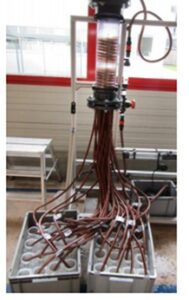
Test setup for measuring liquid distribution with alternative packing materials from Lessmann

Schematic representation of the experimental setup for measuring liquid distribution with Lessmann packing materials
You need to load content from reCAPTCHA to submit the form. Please note that doing so will share data with third-party providers.
More InformationYou are currently viewing a placeholder content from Google Maps. To access the actual content, click the button below. Please note that doing so will share data with third-party providers.
More InformationYou are currently viewing a placeholder content from Google Maps. To access the actual content, click the button below. Please note that doing so will share data with third-party providers.
More InformationYou are currently viewing a placeholder content from Mapbox. To access the actual content, click the button below. Please note that doing so will share data with third-party providers.
More InformationYou are currently viewing a placeholder content from OpenStreetMap. To access the actual content, click the button below. Please note that doing so will share data with third-party providers.
More Information